Showing posts with label health. Show all posts

Thursday, December 1, 2011

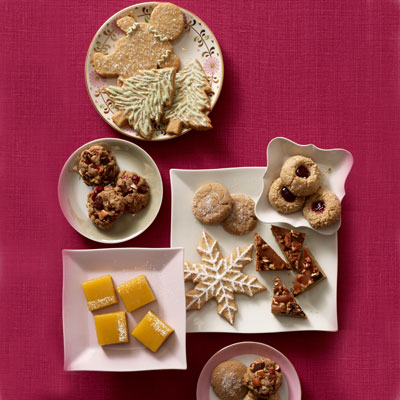
25 Days of Healthy Holiday Treats


Hey guys! It's the 1st day of December... Who's excited? Let's start counting down to Christmas with 25 healthy yummy treats!

These treats are amazing, they're less than 300 calories per serving, but sweet enough to give out as gifts!

25. Whole-Wheat Sugar Cookies
Time: Prep: 20 minutes, cook: 12 minutes, chill: 4 hours
Find the full recipe here

24. Buttermilk Pralines - the pecans will give you plenty of monounsaturated (good) fat!
Time: Cook: 25 minutes, stand: 20 minutes
Find the full recipe here

23. Mini Raspberry Tarts - top it off with fruit!
Time: Prep: 20 minutes, cook: 11 minutes
Find the full recipe here

22. White Chocolate Holiday Bark - loaded with dried cranberries and antioxidant-rich almonds!
Time: Prep: 15 minutes, chill: 30 minutes
Find full recipe here

21. Linzer Thumbprints
Time: Prep: 15 minutes, chill: 15 minutes
Find full recipe here

20. Turtle Bars
Time: Prep: 20 minutes, cook: 30 minutes
Find full recipe here

19. Chewy Ginger Cookies
Time: Prep: 15 minutes, chill: 2 hours, bake: 15 minutes
Find full recipe here

18. Cranberry-Nut Chocolate Chip Cookies - whole wheat, fiber-rich oats, and omega-3-rich walnuts goodness!
Time: Prep: 10 minutes, chill: 8 hours, bake: 10 minutes
Find full recipe here

17. Cinnamon Streusel Crisps
Time: Prep: 20 minutes, cook: 9 minutes
Find full recipe here

16. Chocolate Chip-Butterscotch Bars
Time: Prep: 15 minutes, cook: 35 minutes
Find full recipe here

15. Peppermint Ice Cream Cake
Time: Prep: 10 minutes, bake: 28 minutes, freeze: 6 hours
Find full recipe here

14. Coconut Chiffon Cupcakes with Marshmallow Frosting - made with eggs and oil instead of butter!
Time: Prep: 35 minutes, cook: 20 minutes, cool: 20 minutes
Find full recipe here

We're halfway there!

13. Cinnamon-Sugar Cookies
Time: Prep: 10 minutes, chill: 1 hour, cook: 12 minutes

12. Gingerbread Cookies


11. Fruit Jellies - made with fresh fruit!
Time: Prep: 20 minutes, chill: 1 hour
Find full recipe here

10. Cream Cheese Meltaways with Lemon Glaze
Time: Prep: 20 minutes, cook: 10 minutes, stand: 30 minutes
Find full recipe here

9. Classic Iced Sugar Cookies
Time: Prep: 20 minutes, chill: 1 hour, cook: 10 minutes
Find full recipe here

8. Mint-Chocolate Truffles
Time: Prep: 20 minutes, chill: 1 hour, cook: 10 minutes
Find full recipe here

7. Black and White Chocolate Chip Cookies
Time: Prep: 15 minutes, cook: 14 minutes
Find full recipe here

6. Micro Mini Cheesecakes
Time: Prep: 10 minutes, cook: 20 minutes
Find full recipe here

5. Pumpkin-Cranberry Muffins
Time: Prep: 15 minutes, cook: 25 minutes
Find full recipe here

4. Brownie Bourbon Balls
Time: Prep: 20 minutes, cook: 30 minutes
Find full recipe here

3. Coffee-Hazelnut Biscotti - perfect with a morning cup of coffee!
Time: Prep: 20 minutes, cook: 48 minutes
Find full recipe here

It's Christmas Eve!

2. Lemon Bars
Time: Prep: 20 minutes, cook: 40 minutes
Find full recipe here

ME
RRY CHRISTMAS!

1. White Peppermint Snowballs
Time: Prep: 20 minutes, cook: 12 minutes
Find full recipe here

Hope you guys will enjoy all these yummy holiday treats! Remember to stay happy and healthy this Christmas, and leave the belly to Santa!

Jessica Shum

References:
Health.com. (2011). 25 Days of Healthy Holiday Treats. Retrieved from http://www.health.com/health/gallery/thumbnails/0,,20324208,00.html

Thursday, November 3, 2011

The importance of a good night’s sleep


When kids don’t get enough sleep, they can be moody and perform poorly. They might fall asleep in class and fall behind on their homework. They will have less energy for sports and other physical activities, and when they’re tired or low on energy, they’re more likely to choose unhealthy foods or snacks.
That means getting the right amount of sleep could actually help your child eat better too.(1) Lack of sleep can also lead to serious health problems like, depression and obesity.(2)Most kids between 5 and 12 years old need 10 or 11 hours each night.(3)


We need to pass on the skill of good sleep to children as early as possible to allow them to get the best benefit from an early age. In other words, the ‘achievement’ of sleep is a learned skill which will aid health, growth and mental function for life. As far as children are concerned, the main benefit of sleep is the release of growth hormone encouraging normal growth and bodily development.4

Here are some tips for helping your children get at least nine hours of sleep each night. Help them build a routine—and stick with it. Then, ask them how they feel when they get their rest compared to when they don’t.

Wind Down: Stick to quiet, calm activities before bedtime, and your kids will fall asleep much more easily. Avoid TV, computers and video games during the hour before bed. Don’t leave homework for the last minute. And don’t eat, drink, or exercise within a few hours of bedtime.

Fill In the Naps: Naps can help boost your child’s energy during the day. Naps that are too long or too close to bedtime can interrupt their regular sleep.

Dream Makeover: transform the bedroom into the perfect place to relax and sleep. Keep the room cool, quiet and dark. You can try eyeshades or blackout curtains for extra darkness. Let in bright light in the morning to help kids wake up.


Resources:

1 http://www.healthiergeneration.org/parents.aspx?id=3292
2 http://www.cbc.ca/news/health/story/2010/12/02/f-sleep-tips.html
3 http://kidshealth.org/kid/stay_healthy/body/not_tired.htm
4 www. theSleepCouncil.com


What sleep is and why all kids need it

Time for Bed game: A fun activity to share with your kids

ENJOY

Sunday, April 17, 2011

Re-Cap Of Our "Garden Drive"

Photos courtesy of Kari Lyster

Recently, we held a fundraiser called the "Garden Drive" to raise funds to plant Central's new community garden!  Games, crafts and healthy snacks were provided for students while adults talked over coffee and refreshments.  We'll be holding a "Planting Day" on Wednesday, so more pictures to come!  View more photos from the "Garden Drive" (including photos of the raised beds) after the jump...

Monday, January 24, 2011

Service Learning: Building Campus-Community Ties


A video created by SFUNews about last fall's HSCI 349: Community Health Services cohort.  The video was taken during the final presentations of our projects.  Congratulations Fall 2010 students!

Friday, November 26, 2010

How Living Near Green Spaces Improves Health

Via Children and Nature Network.  Photo Credit: Federico Stevanin

A 2008 study from the UK found that people who lived near parks and greenery had better mental and physical health outcomes than those in areas with little or no access to green spaces.  Those with access to green spaces had lower rates of heart disease.  Living near green spaces increases the likelihood that one will exercise and take time to unwind.  Those on low incomes tend to be in poorer health than those of higher incomes.  However, the study shows that green spaces buffer health differences between income groups.  People of lower income who lived near green spaces reported health outcomes similar to those of people with higher incomes.  Previous studies suggest that just 5 minutes of exercise in green spaces helps to improve mental health and mood.  Even more motivation to go walking in all the trails Port Coquitlam has to offer!

Friday, November 19, 2010

Why We Need Universal Child Care

Photo credit: Santa Ana College

There is a child care crisis in Canada.  Canadian families with young children pay up to 20% of their household incomes on childcare - in some cases more than $1200 per month.  We are facing a shortage of spaces and an increase in costs for child care.  In many European countries, universal (and often free) child care is provided by the government.  In Québec, the government pays part of cost of child care, leaving Québécois families to pay only $7 per day per child.  We need something like this to help families juggle day to day finances while keeping children safe and cared for.  Affordable child care allows parents to work outside the home and keep food on the table.  Visit the Child Care Advocacy Association of Canada to learn more and find out what you can do.  Share you child care story here.

Thursday, November 18, 2010

Where is the Greenest School? Bali, Indonesia


Via CNN

The Green School in Bali, Indonesia is a radical international school.  Made from bamboo and cooled using the wind, the school is a model of sustainability. The school harnesses the power of the sun and the nearby river to supply electricity. In the school farm, students learn how to grow rice and vegetables.  Food from the farm is used to prepare the daily, local lunch.  Students from 17 countries, including children from Bali, attend the school.  Courses are taught using a "learning by doing" method.  The focus of the curriculum is on working together and teaching eco-friendly practices.  This may be an extreme learning environment, but perhaps we can apply some of these ideas here in BC.

Saturday, November 13, 2010

What does Eating Together Have to Do with Health?

Via GOOD

Laurie David is concerned about the death of family dinner.  With the rise of microwaveable and fast foods, family dinners made from fresh, local ingredients are now scarce.  It comes as no surprise that obesity is a growing epidemic in nations where cooking skills and fresh foods are not valued.  Eating together lets families share stories and histories and teaches kids how to make conversation.  Let's make a return to the family dinner.

Read an interview with Laurie David about family dinners here.

Why Obesity is a Complex Problem (and How to Solve it)


Via TED

Jamie Oliver wishes to end obesity through a number of changes to the food industry, school lunch programs, and family dinner.  At Central, some SFU volunteers are teaching classes about nutrition and the importance of fruits and vegetables.  Ms. Reese has tasting classes to get kids to try new (and healthy) foods.  Even with these programs in place, more needs to be done to make sure our kids (and adults) stay healthy into the future.  Watch the inspiring video above.

Tuesday, November 9, 2010

How Can We Get Kids Excited About Food?


Chef Alice Waters of Chez Panisse in Berkley, California founded the Edible Schoolyard.  The Edible Schoolyard teaches course subjects by letting students muck around in the garden.  The garden teaches students about sustainability, gardening, and food preparation.  It is also a way of getting kids excited about food and making healthy food choices.  Alice partnered with her local middle school to create the garden.  The garden has grown to over an acre in size and produces hundred of pounds of fruits and vegetables every year.  Food prepared from the garden is given to local charity.

Monday, November 8, 2010

How to Help Communties Through Service Learning

Via TED

Emily Pilloton, founder of Project H Design, moved to rural Bertie County, North Carolina to help create a service based learning course for the local high school. Service learning provides students with the opportunity to apply course knowledge to real life though hands-on experience. Pilloton's course teaches principles of design and puts these skills to use through community projects. For one project, students created a "Learning Landscape" that combines physical activity and math. The class researches the needs of the community before building and constructs projects with users in mind. We have written about service learning before here.

Thursday, November 4, 2010

Who's Washing Their Hands?

Via GOOD

It's cold and flu season, so here's a reminder to wash your hands with plain soap and water to prevent spreading viruses and bacteria to others.  Using antibacterial soap increases antibiotic resistance and pollutes waterways, so choose plain soap.

To view a hand washing demonstration, follow after the jump...

Wednesday, November 3, 2010

Meet the Class!

Photos courtesy of Jenny Scott

Last Friday, the Health Sciences 349: Community Health Services class met at Central Community School.  Some students joined in the Halloween parade earlier in the day and showed up dressed in their costumes!

The Simon Fraser University (SFU) students are working with Central Community School staff, teachers, and students to help create a healthy school community.  The SFU students take a broad definition of health, helping students improve their literacy, numeracy, eating choices, physical activity, social relationships, and other health behaviors.

Click here to read a news article to learn more about SFU students and their work with Central Community School.

View more pictures after the jump...

Saturday, October 30, 2010

How to Deal with Bullying


Everyone has been bullied at one time or another.  It is cruel and must be stopped.  In bullying, there is a clear power difference between the bully and the victim. Bullying can be calling someone names, starting a rumor, excluding someone from a group, physically harming someone, or taunting someone online. Follow after the jump to read what you can do to reduce bullying at your school:
  • Kids, when you see bullying happen, tell an adult.
  • If someone bullies you, look them in the eye and say "Stop.  I don't like it.  Leave me alone" then tell an adult.
  • Ask your school if they have a bullying policy (Central does).
  • Parents, if you suspect your child is being bullied, tell the school administration.  Listen to your child and suggest ways to avoid confrontation.
  • Record bullying events when they happen.  Include date, time and place.
  • Work with teachers, students, parents and administrators to solve the problem.
(Adapted from "A Bullying Primer for Central Community School", 2010)

Thursday, October 28, 2010

"Waiting For Superman": A Movie About the Importance of Great Teachers


TakePart: Participant Media - Waiting For 'Superman' - Infographic from Jr.canest on Vimeo.

"Waiting for Superman" debuted in Vancouver at the VIFF.  The filmmakers show the magical effect of great teachers on students.  Great teachers help students achieve their dreams and strengthen communities.  This video clip shows the possibilities if we support each child's educational goals.

Will There Be a Bike Share Program in Port Coquitlam, Too?

Via City of Vancouver

Recently, Vancouver residents saw a demonstration of a bike share program from Montreal called Bixi.  Bike stations located all across Montreal provide the public with affordable rental bikes for short trips usually between 5 and 30 minutes in length.  Bike share programs help calm traffic and boost physical activity.  Vancouver city officials are planning to create a similar program here in the Lower Mainland.  Problems with other systems that must be solved include theft, damage, and cycling safety in the city.  Cycling is a great way to stay fit, keep active, and improve health.  Let's hope Port Coquitlam jumps on the bandwagon, too!  We already have bike lanes!

Wednesday, October 27, 2010

17 Ideas for Healthy Eating

 Via OpenIDEO

IDEO, an Internet design company, worked with chef Jamie Oliver and all their users to answer the question: "How can we raise kids' awareness of the benefits of fresh food so they can make better choices?"  192 suggestions were made.  The top 17 ideas were made into a free downloadable PDF document available here.  The ideas run from creating healthy recipe cards to conducting a veggie circus.  One of the suggestions is "Tasting Classes", which happen regularly in Ms. Reese's Grade 3 Class here at Central!

Lunch is a Health Issue


Via TED

Although we do not have a lunch program in schools in Canada, we have much to learn from this video.  Ann Cooper talks about how we should think of food as a health issue.  She argues that we should spend more money and direct more attention to the health of our children in schools.

12 Ways to Make Healthy Lunch Choices Easier

Via The New York Times

This week in The New York Times, university professors re-designed the school lunch line.  The goal of the project was to improve students' healthy decision-making. The professors made nutritious options more attractive than unhealthy options.  Many of the same rules can be applied at home to help kids learn to make healthy decisions.  Click here for the full article and infographic.

Saturday, October 23, 2010

Should Advertisements Be Allowed in Schools?

Via David Brewster of the Star Tribune

In Minneapolis - St. Paul, Minnesota, school officials are deciding to cover 10% of school spaces (walls, ceilings, floors, and lockers) with advertising.  The one-year trial will bring nearly $200 000 to the school district.  School officials defend their decision, saying that as long as the ads do not affect learning, they will keep them.  The school will be able to turn down ads deemed not suitable for kids.

How does advertising in schools affect students' self-image and health?  Should school officials take more into their decision-making than advertising's effects on learning?  The funds from the advertising amount to just over $25.00 per student.  Is this enough?  Is the bottom-line too important to schools?  Does turning to advertising show that schools need more money from governments?